
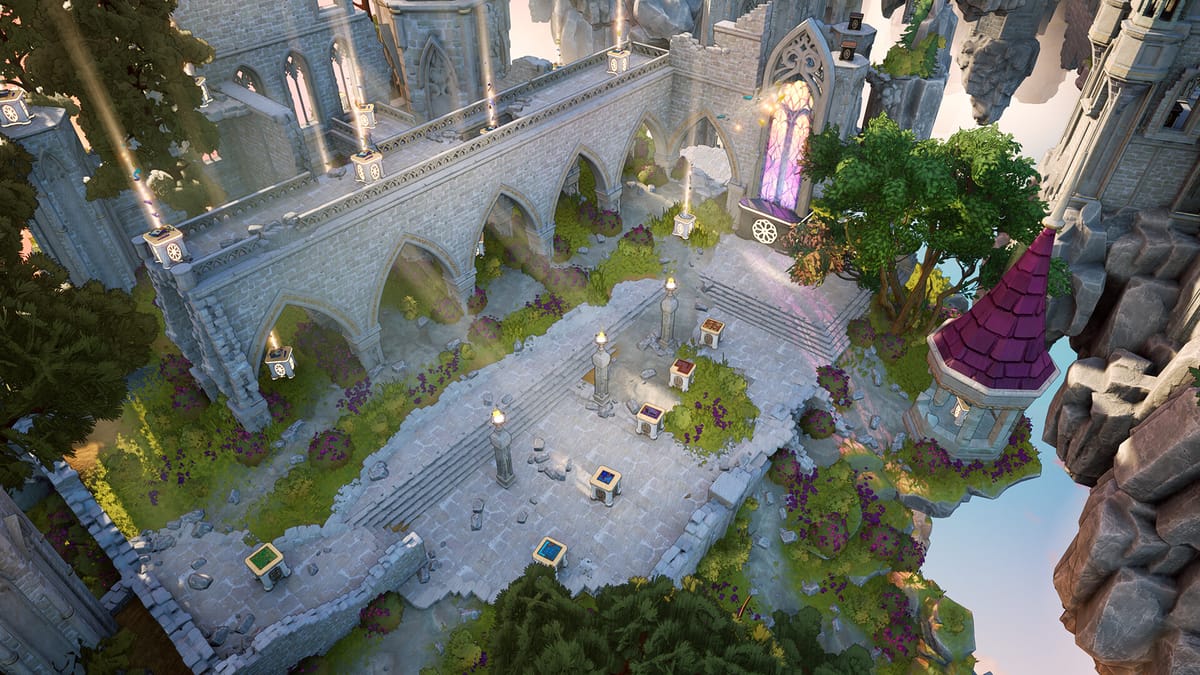
It's funny to me that some of the most acclaimed puzzle games are those that, in a way, refuse to shy away from their own perceived ridiculousness. Better still: in so far as their initial set-up goes, to play into it and in a way, acknowledge that no sane or sensible entity/community, would allow say, a corporate building, an island or any kind of settlement, to be so over-populated with puzzles, to the detriment of everything else. You're seldom bound to find a location or internal environment littered with such an over-abundance of cubes, buttons, portable lasers, screen panels or in this case, tables to craft stained glass windows...but alas, here we are.
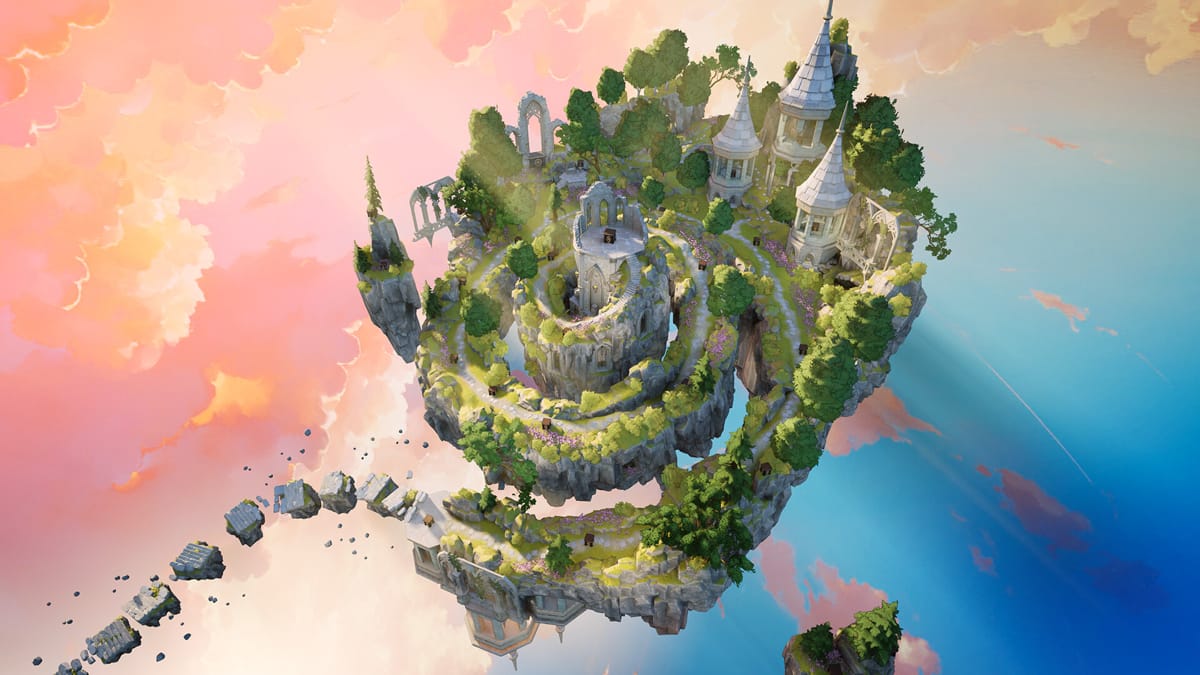
Atop these myriad of floating islands (already a fairly abnormal premise, wouldn't you say?), town settlements, markets, ruins, lakes and forests in a way become the backdrop to what are these conveniently adorned sequences of tables. Most of which, oh so coincidentally leading us to a scattering of windows with which must be repaired. And what's this: to do so, one must grow proficient at crafting said glass ornaments – separating each area into different shapes – by following certain rules or conditions?
Of any of the flurry of demos experienced during the most recent Steam Next Fest, what set something like The Artisan of Glimmith apart for me – aside from one's natural attraction [addiction rather] to puzzle games – was its refusal to shy away from the absurdity of its own premise. Hundreds of tables adorning the titular setting; some placed in even more nonsensical positions, but not once feeling the need to provide some rationale or narrative reason for such layout. Other than the most befitting of pitches: "here's hundreds of puzzles, good luck!".
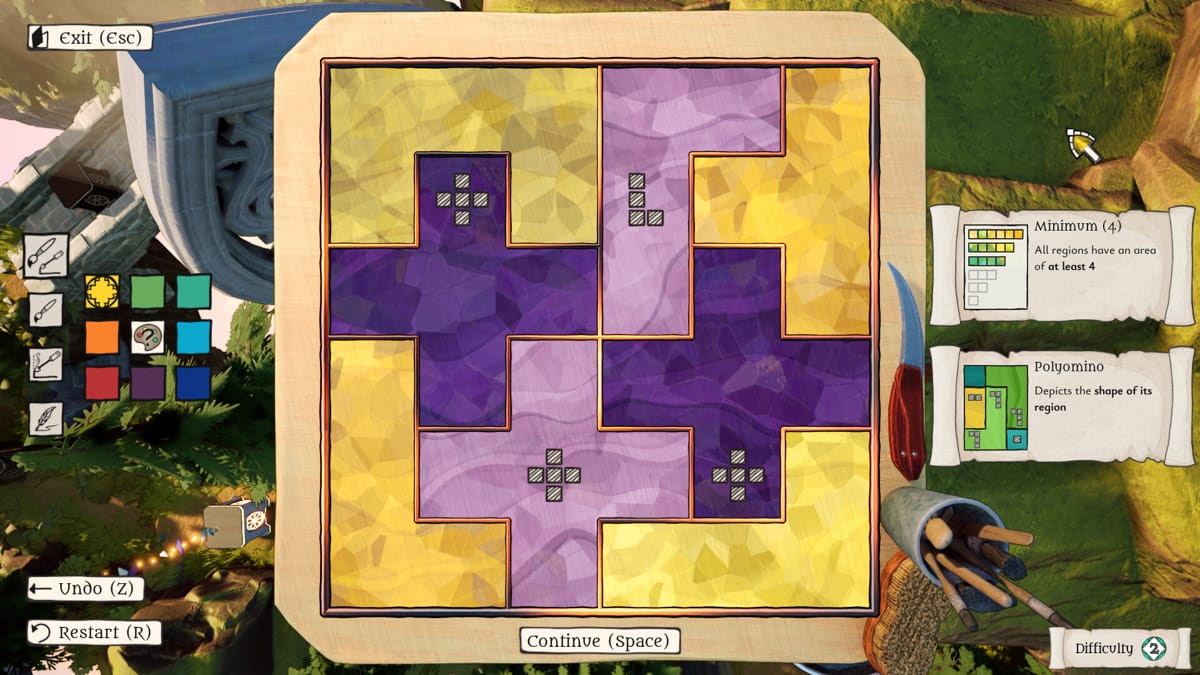
And just as any great demo should aspire to conjure, The Artisan of Glimmith was one I experienced such crushing sadness over, upon reaching that inevitable barrier sealing off the full game's breadth of content. Cue one's internal conjuring of that most agonizingly delightful Eric Andre meme (you know the one), but also the immediate recollection that such a reaction, has in fact been experienced prior. Due to the fact that the developer of The Artisan of Glimmith, Lunarch Studios, are the same minds behind the fascinating Islands of Insight. A game that despite its questionable MMO-esque online inclusion, was carried immensely by its sheer glutton of puzzles to delight in.
Fast-forward to now and while the online elements are absent, The Artisan of Glimmith comes across as Lunarch distilling everything that made their previous game such a wonderful time-sink, into something that one can approach as either novel distraction or worthwhile time-sink alike. The compartmentalizing of individual puzzles – coupled with how easy it is to both interact and navigate this top-down surveyed world – means you can spend but a few minutes in, or perhaps countless hours with and still feel like sufficient progress has been made.
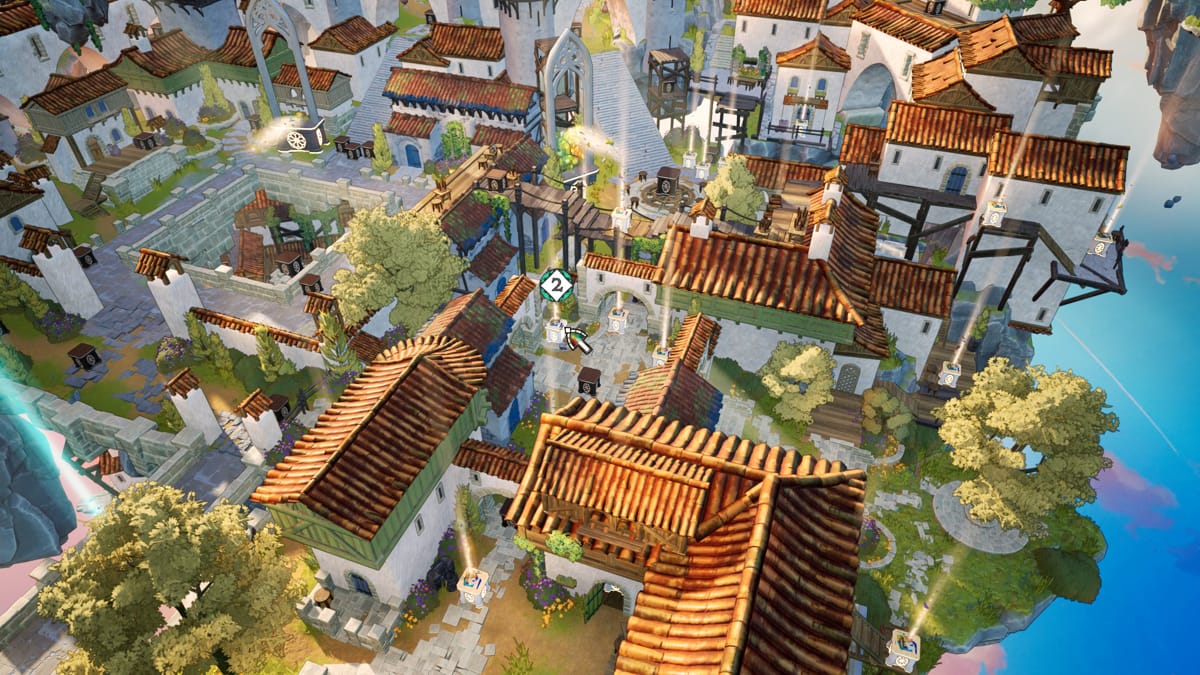
But look a little deeper and you'll find that Glimmith is much more than just a check-list of theme and concept-based areas to cross off. Yes, there's no denying the game's Witness-like influences emanating strongly. Or that its core progress doesn't run off this same mantra of completing set numbers of puzzles in a strict order, before the game deems you worthy to move onto more complex scenarios. It's that very notion of how players decide on reaching the desired end-goal for that region, that deserves additional plaudits. Here, Lunarch offer an alternate view.
The view being: getting to a desired objective, shouldn't strictly be limited to one "sequence". Perhaps it should be left to players to determine, of the two dozen-or-so puzzles provided for that given area, which of these they feel confident in tackling. Should you wish to stick to the "main path" of difficulty "1" and "2"-graded puzzles, that's totally fine. But if you already feel accustomed to the new rules and wish for something a bit more complex or grander in size – a self-made and self-propelling challenge on top – completing difficulty 4/5/6-grade puzzles, is an option the game abundantly provides room for.
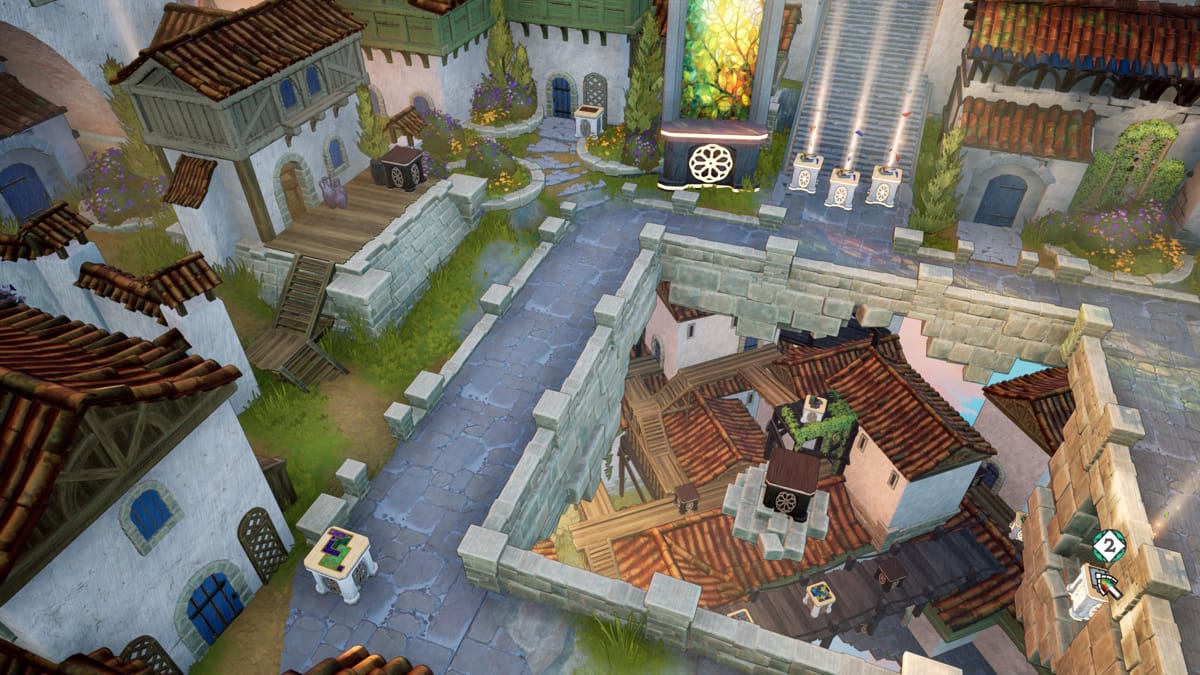
That hunting-down of one's own personal accomplishment eventually transitions nicely into another one of Glimmith's hidden joys...quite literally in some cases. And that of course is the game's use of parallax – specifically, the trusting-in/awareness of a player's own latent curiosity – via hiding optional puzzles, in and around the environment.
What starts as a quaint means to extend one's play-time, surprisingly – and quite quickly – shifts to that of seeing just to what extreme the developers have gone in keeping such higher-difficulty challenges from one's gaze. It's the kind of interaction you can't help but smile at, upon realizing that...yes...the developers knew I would do that. Or have gone to such lengths to make hunting down this content, a kind of puzzle in of itself.
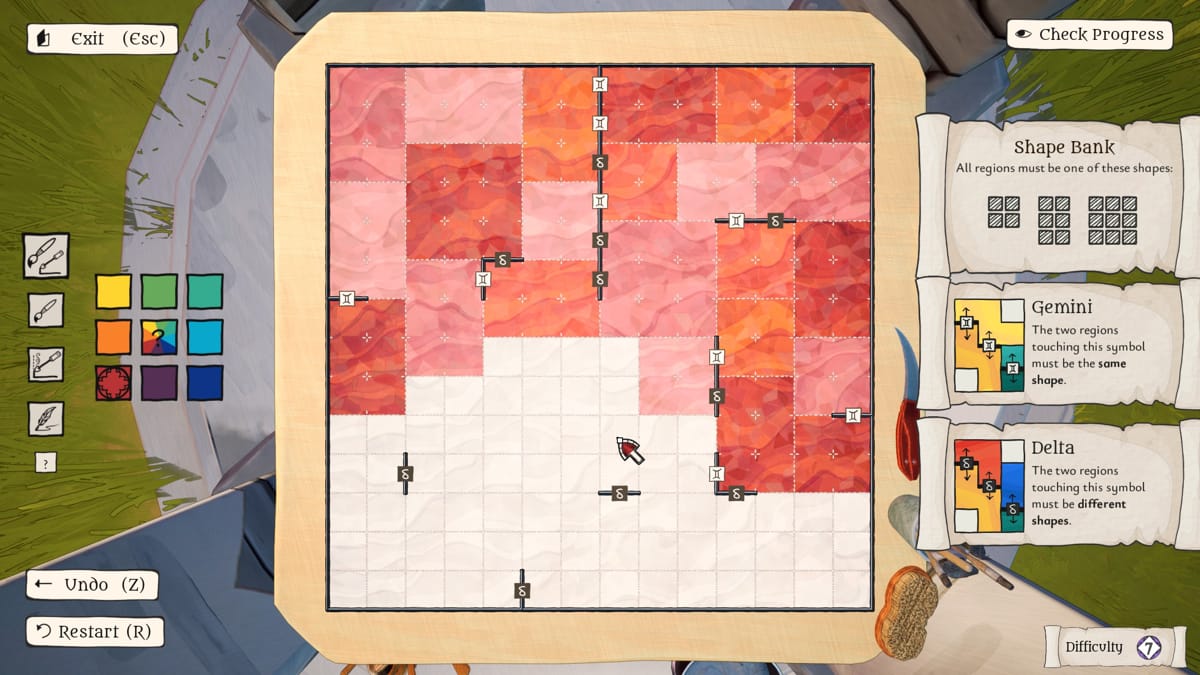
Knowing that I just might make an attempt to shift the game's camera in a certain direction, or that I'd glimpse at the very extremes of a screen's edge and...lo and behold, there's another one! And another one...and another one! Satisfying as it's been to make one's way through the game's array of rules and conditions to abide by in its puzzles, it's pleasing to report that a game like The Artisan of Glimmith can delight in other ways on top. Ways initially unexpected and better still, can be put down to more than just the design and construction of puzzles themselves.
That being, the notion of understanding/recognizing how a player might "think", in turn leading to these emergent and delightful discoveries. Dare I say I'm reminded fondly (and prepare yourself for a wild tangent here) of a game like Octopath Traveler – the 2018 Square Enix JRPG – and how that title (eventually, the series) utilizes depth perception and camera parallax alike, to keep certain routes hidden and/or tucked away. When a game can find interesting ways to incorporate such intentional use of perspective, screen-space and the multi-branching unpredictability that is a playerbase's line of thinking.
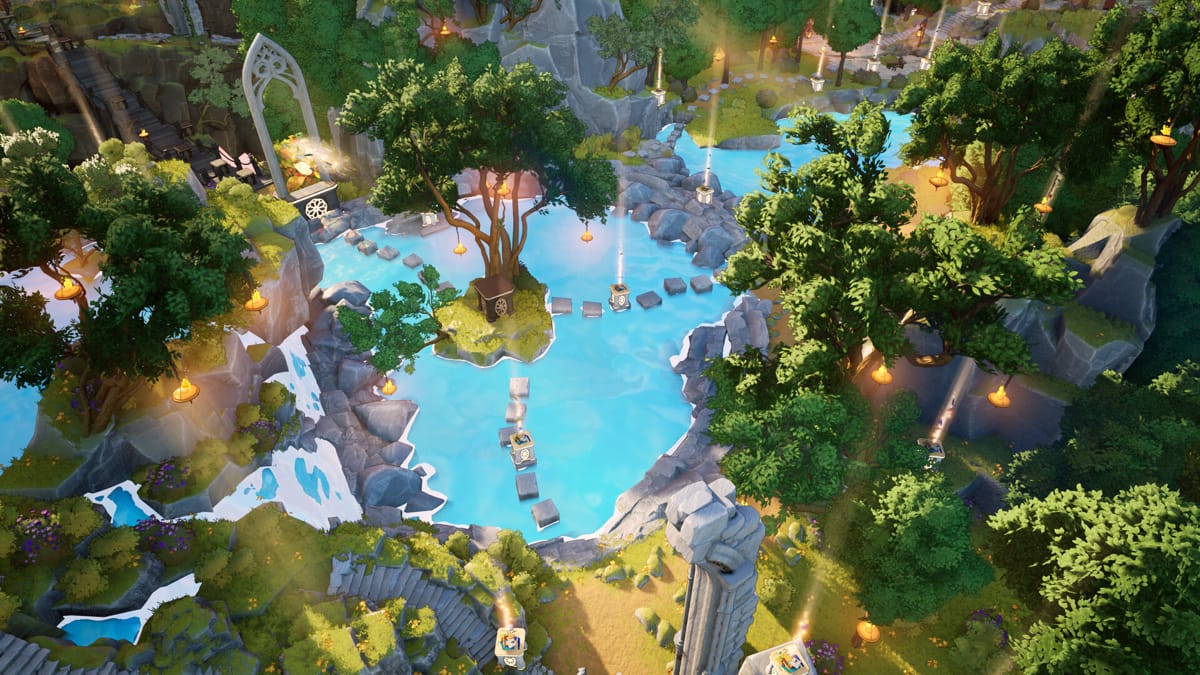
The Artisan of Glimmith is a game you can certainly come to for its splendor of puzzles to invest one's time into. But it's one you may well surprisingly stay with, because of these very additional qualities. Yes, for those with a near-insatiable thirst for checking-off lists and adorning achievements with the most golden of ranks (and perhaps even higher a status), The Artisan of Glimmith will certainly win over on that front.
But in following on from such an ambitious and conceptually interesting project that Islands of Insight was, it's pleasing to see that despite the smaller, stripped-back stature, Lunarch Studios' more approachable, inclusive philosophy to puzzle design and tempting exploration, isn't lost with their latest release. If anything, The Artisan of Glimmith proves those ideas have been enhanced.