
Challenging, unforgiving and incredibly rewarding as a result, Death Howl's imposing atmosphere and artistic direction, make this a truly stand-out souls-like/deck-builder hybrid for the ages. One unafraid to throw you in at the deep-end, but whose revelatory "ah-ha" moments compel you to sink even further into.
One of the benefits of existing during a time of ample hundreds of video game demos all fighting for one's (and indeed everyone's) attention at any given time, is that for those that hit – for those carefully-tailored vertical slices that manage to not only come across competent, but effective – you automatically enter a period in which time is seemingly assorted into two categories: the period before you experienced said demo...and the time afterwards.
Granted, it doesn't happen all the time; more often than not, successful demos are those whose vertical slice or cornered-off segment of the early periods, show enough meat on the bone. Enjoyable in their own right – the inevitable cut-off of a game thanking you for one's time (and hopefully you'll wishlist if it's not too much trouble wink-wink) resulting in muted despondency that it's finally over, because you wish you could keep playing what you've just experienced.
But then there are cases like Death Howl – and its own respective demo experienced earlier this year – that go one step further and provide something truly absorbing and gripping in their intent. A feat that is made even more impressive given developer The Outer Zone's decision to focus on it being a souls-like/deck-builder hybrid. Those genre drops, only ratcheting up the probability of so many others rolling their eyes and dismissing it. Another one of "these" games, one might infer without a second notice.
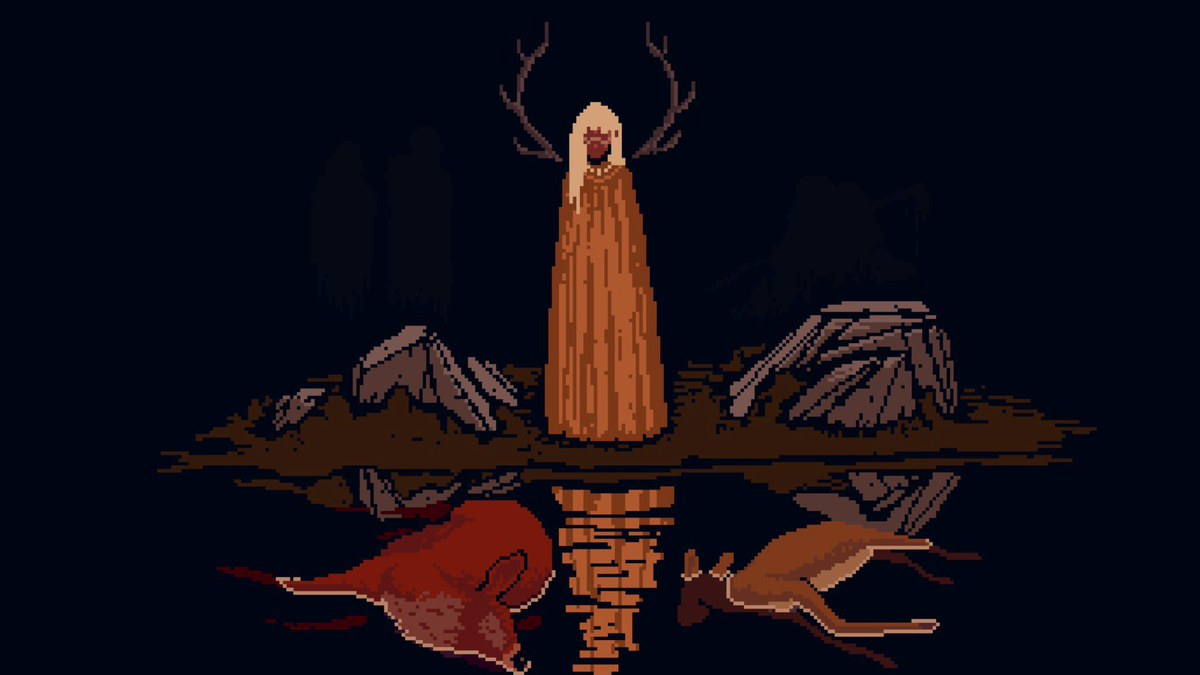
Indeed, if one were to pluck from out the online PC space, two of the most common (to the point of hyper-saturation) genres prevalent, "souls-like" and "deck-builder" would undoubtedly be the two to reach for. And yet from the very off, Death Howl's strikes you as an entirely different beast. Absent is the sense of dazzling spectacle or some would-be attempt to wow with detailed artistry or progressively-complex gameplay mechanics. No, Death Howl's appearance and outward expression is a lot less stripped back: simplified, but not through some lack of effort. Inconsistent, yet meticulously designed that way.
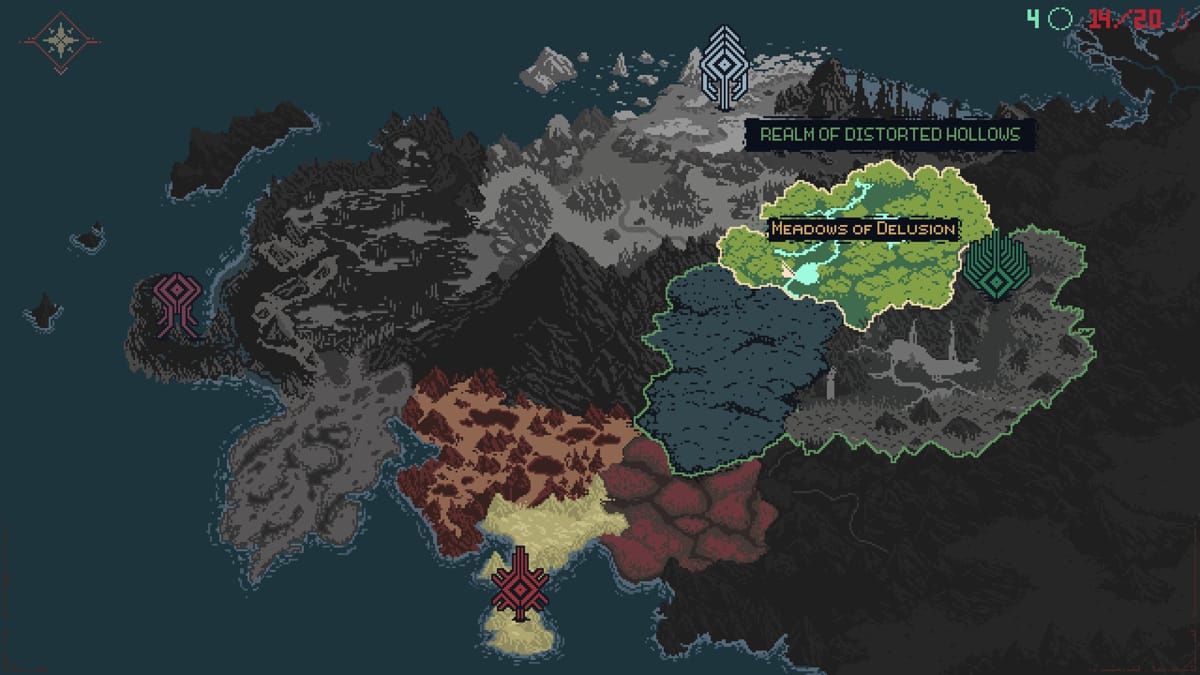
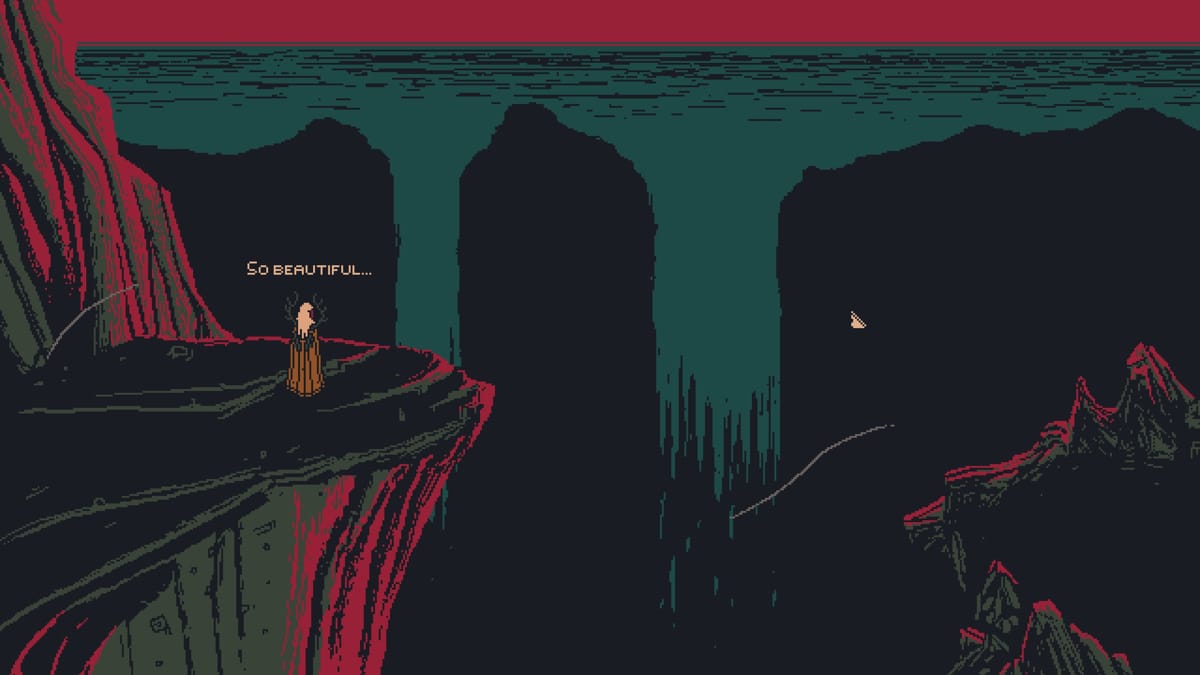
Call it the influences of Scandinavian folklore and the game's backdrop as that of the spirit world making themselves known, but Death Howl needn't name-drop a single reference for its hollow, voided aesthetic and more minimalist approach to pixel art, to hit you. Death Howl is a game whose world is caught in an uncanny flux between certainty and uncertainty – between subdued greeting and seeping hostility. You, a grieving mother looking for your deceased son, slowly feeling your way through a realm you shouldn't be in – making your way down paths and routes that almost seem to materialize and dissipate the closer/further away you get. Each pixel fragile and granular – like sand slipping between one's fingers.
Though the execution might look simple, it shouldn't go unstated just how effective Death Howl is in drawing you into its ethereal world where everything feels in a constant paradoxically flux between existent and non-existent at the same time. An appeal that is bolstered further by the game's brilliant use of sound, both in musical accompaniment but also as contextual cues for a given action. How Death Howl, for example, drastically falls near-silent upon you arriving at a totem – this game's equivalent to the Souls-tradition "bonfire" system. It's an incredibly brief, repeated and short-lived moment, but it only adds a greater level of isolation and more crucially, importance to one's actions.
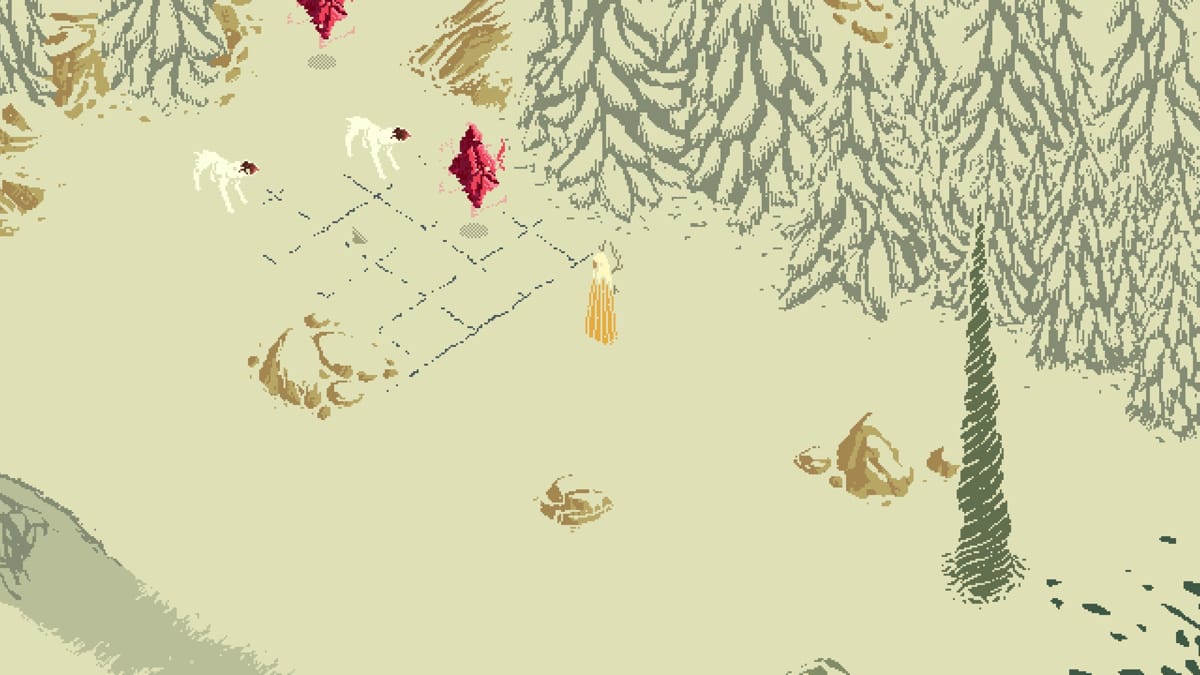
Death Howl is full of these bitesize, minuscule injections of tension. How encounters, like the rest of the world, slowly materilize into view and there's this bubbling, oscillating rhythm upon arriving at what is essentially another roadblock on one's travels. As if the game itself is anxious on your behalf, as to what's about to happen – the entire make-up of the setting in Death Howl, one of unexpected instability. Again, these quaint aesthetic touches shouldn't usually be this note-worthy, but it's because the game is so deliberate in how little colour and visual detail it gives off, the resulting negative space and void surrounding one's player-character, is imbued with this added sense of uncertainty-veering-on-hostility.
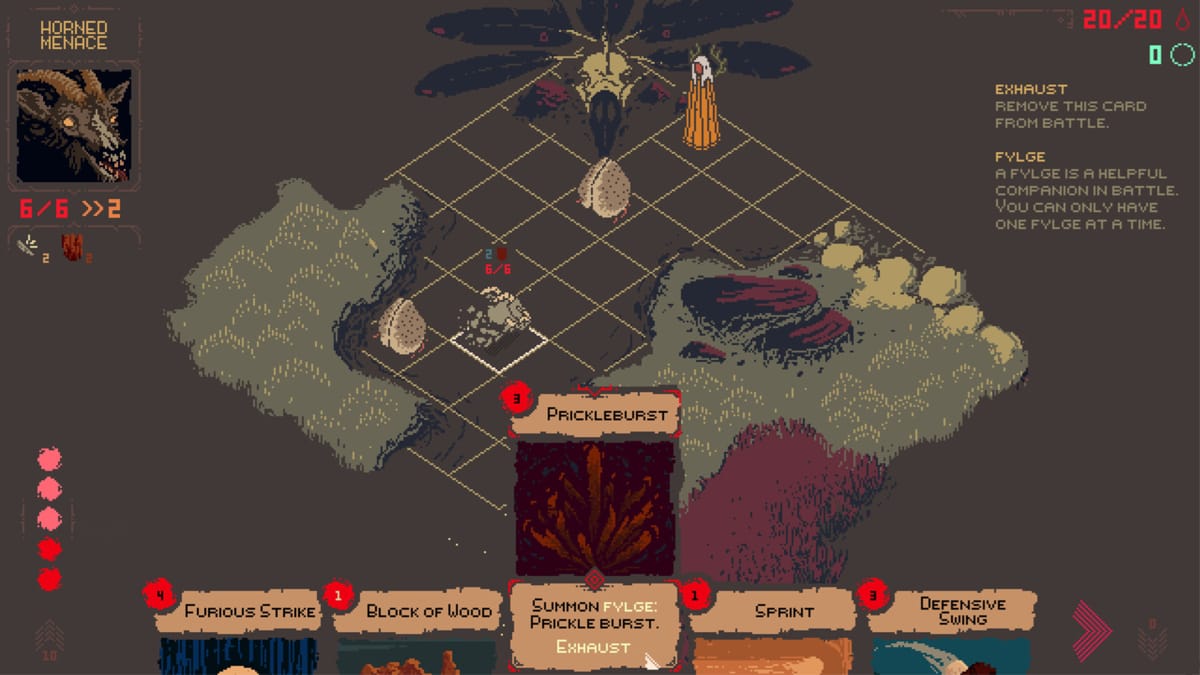
And then you finally find yourself engaging with the game's many turn-based encounters – the game even having you properly commit/confirm your decision prior to any battle commencing – where Death Howl's most impactful moments of success and failure, are felt. Upon arriving at an encounter, players are given the option on which grid space to start on relative to the direction they've approached a battle from. A decision whose strategic ramifications grow later on, when it's made apparent encounters can be approached from numerous directions.
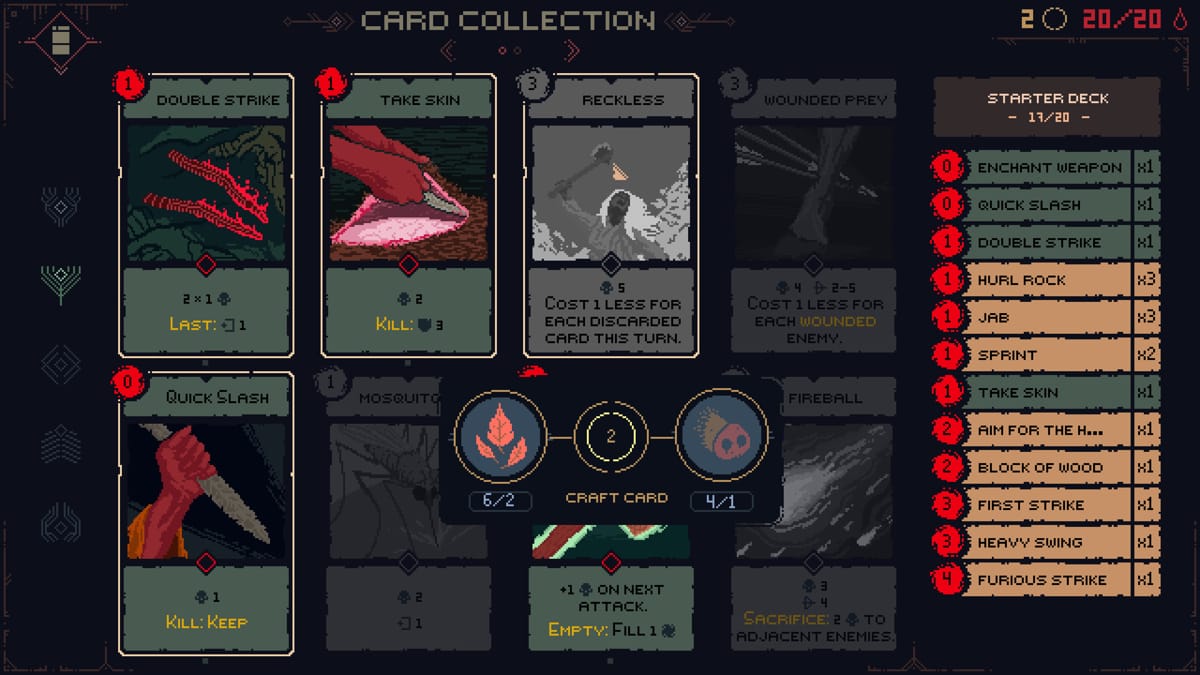
Commencing an encounter has Death Howl's card-based mechanics finally come into play. Drawing from a deck of maximum twenty cards, players expend mana to both move across a grid and play cards, in the pursuit of taking out all hostile enemies in play. Defeating enemies rewards you the titular Death Howl's that can be spent to either craft new cards – in combination with found resources/materials littered about the world – or progress towards upgrade points that offer helpful boons in and out of battle.
From the very off, Death Howl doesn't mess around in punishing those who are idly-minded or worse, not paying close attention. Play an amateurish move or at the very least, aren't being thoughtful on one's position relative to an enemy's own attack range and you can see your slender health-bar – a measly 20 hit points – eaten away in a matter of turns. In fact, Death Howl goes one further in this regard wherein enemies have the ability to inflict heftier, critical strikes should they find themselves in the right spot relative to one's own position.
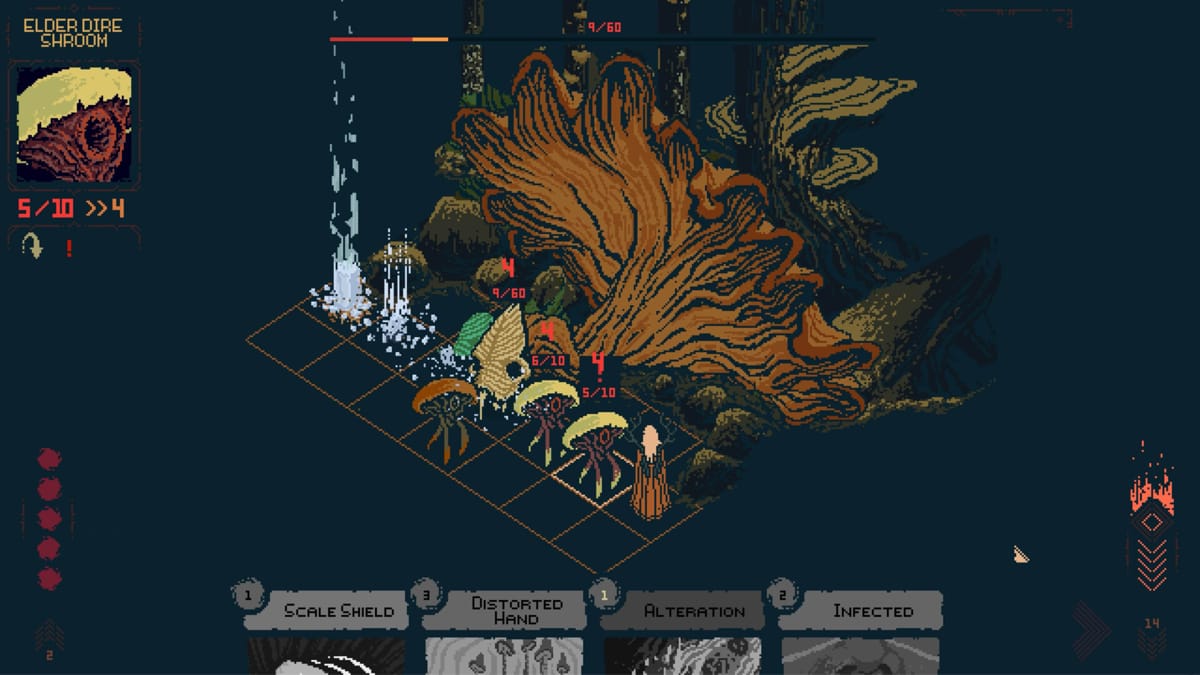
Like with any classic souls-like gameplay loop, part of the satisfaction with victory is in getting accustomed to each enemy's attack types/behavior and knowing the correct course to avoid it. Putting in just the right amount of time and patience, where going an entire encounter hit-free isn't far-fetched at all, but entirely and logically possible. Utilizing both one's deck but also environmental hazards at times, to help turn the tide in your favor. Victories, but so too the [many] defeats one will accrue, have greater ramification as a result. It needn't matter that the encounter is but one of many on a map scattered with even harder variants lying in wait – Death Howl does a great job at rendering success (no matter how fleeting) as a worthwhile accomplishment in its own right.
Part of the reason perhaps as to why Death Howl's immediate difficulty feels well-suited (albeit surprising at the start), is likely down to the fact that players are given a multitude of branching paths and routes to get to a desired objective or goal. Beyond that, opportunities to explore and discover such things like optional quests and hidden caves to scout out, firmly plant Death Howl in that pool of releases driven by a player's own determination to succeed over the growing challenge. How much (or little) the previously aforementioned ability to approach encounters from more than one compass direction, comes into play.
Even the very presence of optional quests, feel like worthy challenges to participate in and test one's understanding of the game's systems. An early instance, requiring you to find a lost bird and return it to a tree spirit, unfolds into a slightly more complex and troublesome affair than initially perceived. Quest items/characters becoming playable cards in their own right – serving as temporary gimmicks in their own right to consider, adapt to or perhaps in some cases, gamble with along with the respective buffs/debuffs their presence brings.
Eventually new enemy types further down the road and inevitably, "boss"-styled encounters, provide new gimmicks to take into account. As you explore more of the world, the means by which you can upgrade your passive skills and abilities also increases. However, the interesting twist here is that only certain subsets of skills work depending on the zone or region you're in. Meaning that even when at your most versatile and knowledgeable, the risk of failure seldom wanes. Health pool remaining relatively the same throughout – the only real means to gain lost health back is by resting, which of course means resetting the world and reviving all slain foes. All while the strength/threat of enemies only grows the further you progress.
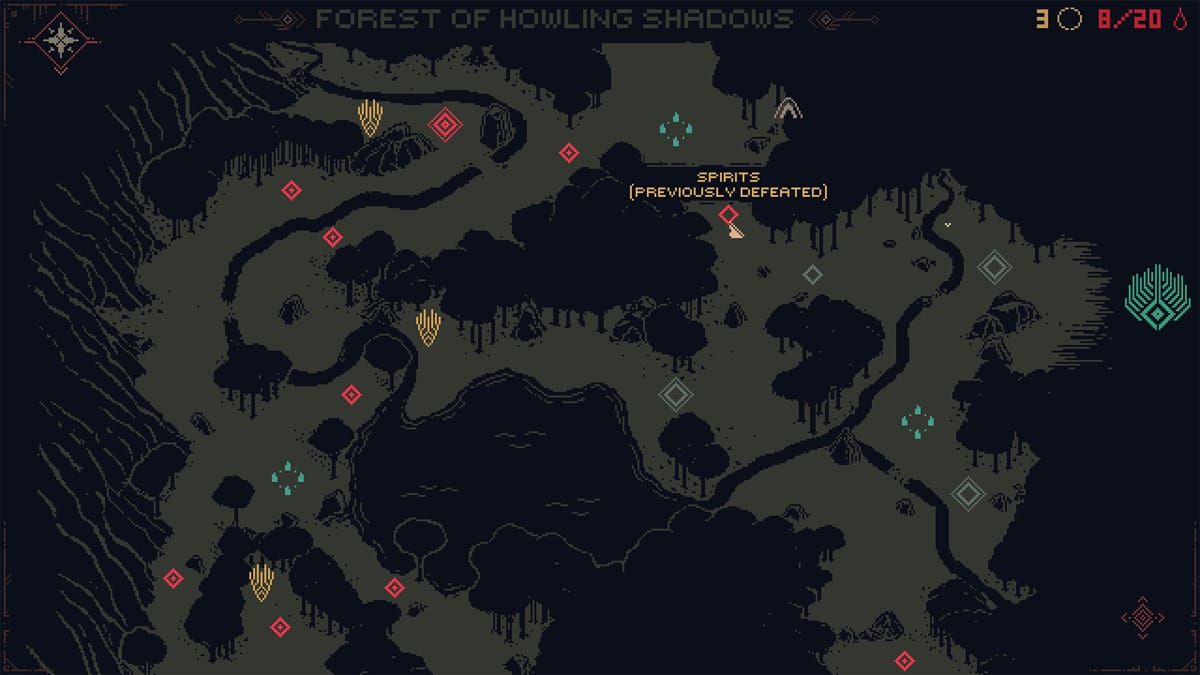
Understandable it might be to feel like the game is throwing a lot at you and so early on, it's also one of those rare occurrences in video games where "grinding" – that is, the need to repeatedly engage in a certain task so as to meet some arbitrary target – doesn't detract from a game's broader qualities. And that's because Death Howl, rather unlike most souls-like imitators, understands that the notion of a tactical retreat – or even just going about the same encounter a number of times until one is absolutely confident in one's strategy – can be just as fruitful as rushing forth into successive encounters.
Not everyone will take kindly to the game's challenge and if you were to offer any sort of criticism to Death Howl, it's that that notion of difficulty is a condition players will have to immediately accept. Rather than relying on some middle-ground for the game to eventually soften on; this is a deck-builder where failure and mistakes will pop up at a near-common pace. But as is the case with any great deck-builder past, knowing how to manipulate one's deck and deducing how certain cards can interact with one another, so as to maximize one's output, are here to be discovered.
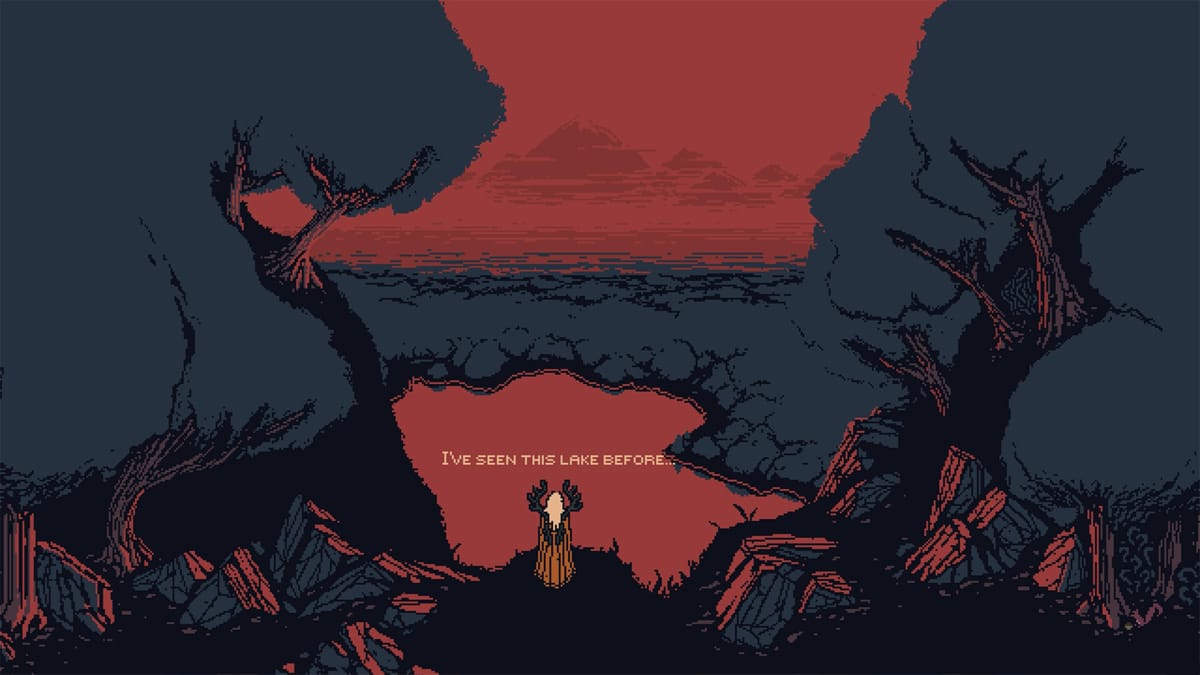
Whether it's the striking beauty of its minimalist pixel art, its imposing sound design, or the simple pleasure of conquering the game's many grid-based battles, Death Howl is a dense, smart and truly brilliant package of aesthetics and mechanics working to full effect. A deck-builder constantly finding new and nuanced ways to make you rethink tactics – a grueling, at times punishing, odyssey of small accomplishments and grander revelations. The path to both victory and truth may feel unforgiving, unfair even, but allow Death Howl the time and the patience to prove itself and what you'll find is nothing short of one of the best turn-based tactics games in recent years.