
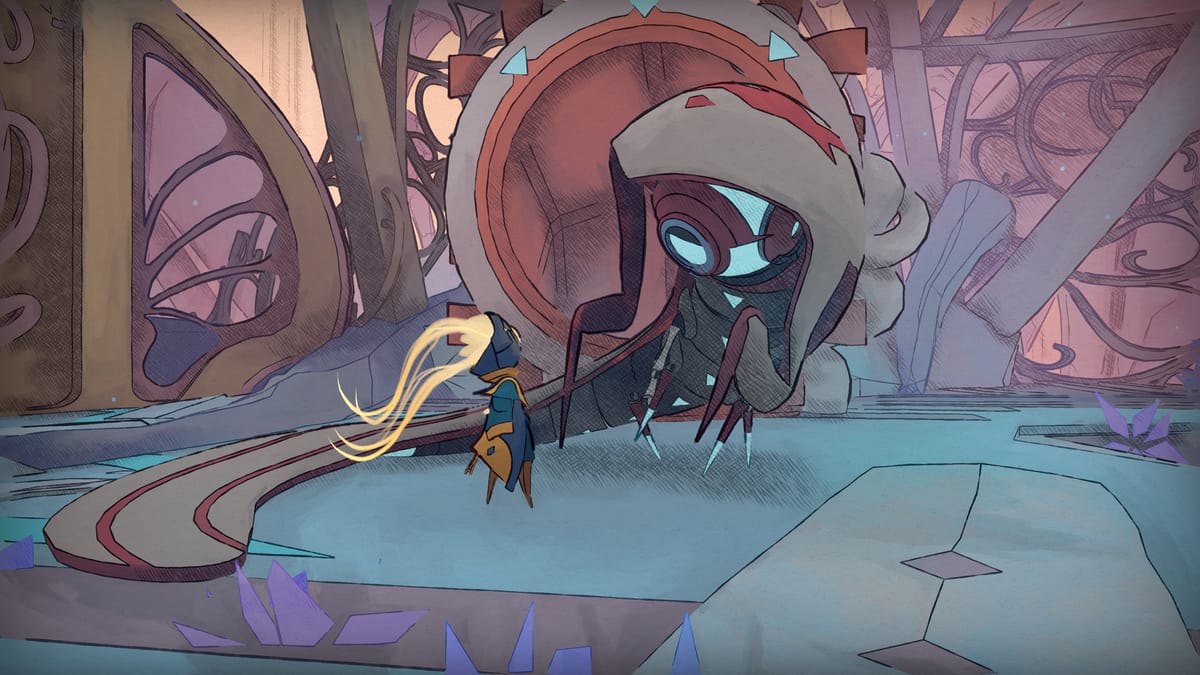
Developer Douze Dixièmes' foray into Metroidvania exploration and discovery, is nothing short of brilliant. Structurally curious yet thematically moving, MIO: Memories in Orbit has made an almighty case for recognition as not just one of the year's best, but perhaps, one of the best Metroidvania's in years.
So often I would joke to myself – albeit with some smidgen of genuine concern – that an overuse of bright, vibrant, spectrum-wide colour across many video games, sooner or later, would become the new "gray-brown palette". Namely, an artistic/aesthetic choice that in time would come to define but ultimately degrade a select period of video game releases. Games made by developers whom, justifiable intentions and lacking ill will notwithstanding, are blissfully unaware that all things eventually conglomerate into a pattern, a recurring formula, a running trend. A tired cliche many I suspect, would like to see the end/back of.
I can't speak for any member of the development team at Douze Dixiemes, let alone those responsible for the chosen art style/direction governing MIO: Memories in Orbit. Nor would I want to. But it can't be helped to survey the game's off-kilter filtering of this vast, ark-like vessel comprising the game's setting and speculate that perhaps, this is more than simply visual attire. Its paler treatment of color and saturation; its evident hand-drawn sketching of marked lines meant to denote "shadow" and that absence of light. Even the way foreground and background elements appear as if frozen in two entirely different states of being. One just about getting by as excusably finished, the other resembling something more akin to a concept, a vision? A hope for what might be?
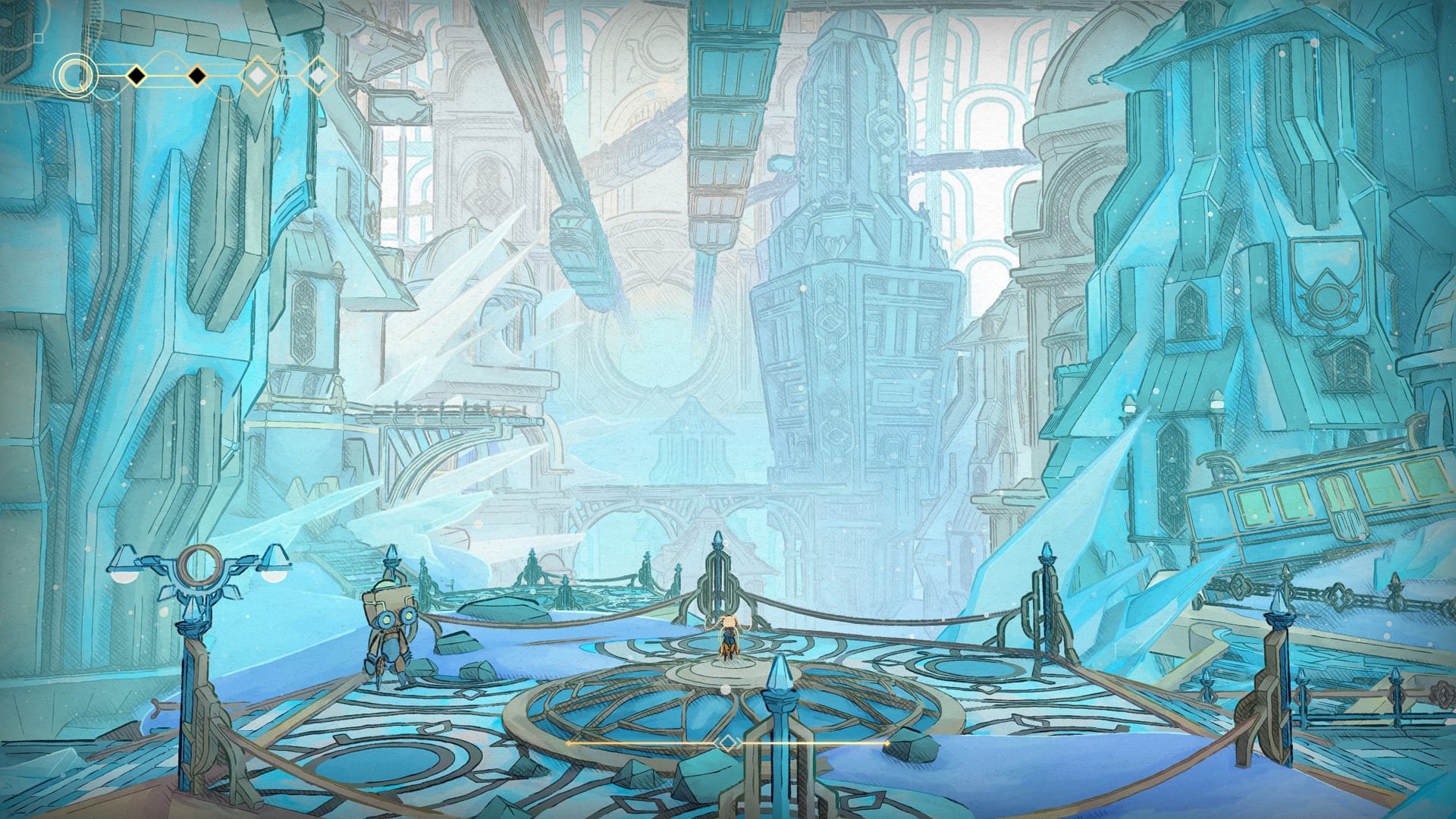
And I bring up the game's look for a specific reason. One which during the early parts of the roughly 25 hour journey through MIO: Memories in Orbit, I mistook as purely cosmetic – a nicety to the game's aesthetic. Something to look at, maybe offer passing comments on its novelty, but nothing more. Eventually, what you realize, be it the visuals or through any number of the game's other wonderfully-realized and integrated systems, is that MIO: Memories in Orbit has so much more depth and intended synchronicity of its individual elements, than initially expected. All there to further serve the game's rather melancholic and impactful (not to mention a little personal and close to home too, I'll admit) themes on hopelessness and that struggle between fantasized idealism and the harshness of reality.
It's no exaggeration to proclaim how unprepared I was for how far MIO delves into such weighted themes and ideas. And how hard it can hit. The dialogue and conversations of many a robotic NPC (named or otherwise), the hidden lore and text logs to uncover in fleshing out just what has taken place. And despite the shared backdrop of "machines trying to act human" (as played out and tired a premise that is in fiction), with what might be this game's most poignant nod to a game like Nier: Automata. A tale compelling me to push on, just so these characters can have their happy ending. Albeit a semblance of "happy" in what is an increasingly bleak set of circumstances.
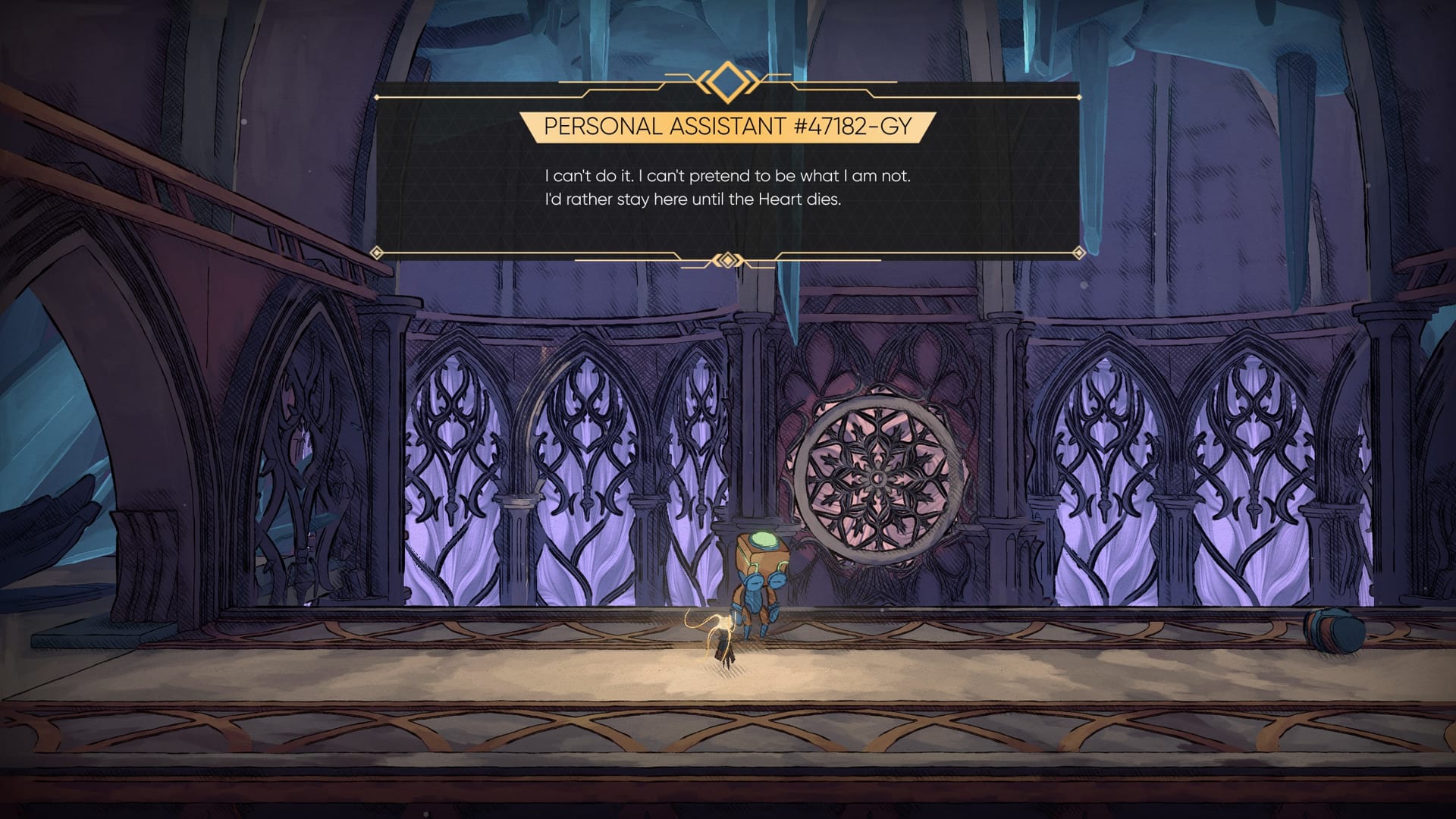
But those Nier comparisons extend even further. How even the most passive and inconsequential of gameplay mechanics, can hit you with added narrative weight to one's surroundings and ongoing circumstances. A very particular feature, which I won't reveal, one can so easily dismiss or ignore on one's travels, but will bound to have a penny-drop moment – not to mention a little bit of a gut-punch – for those looking a little closer.
That I haven't even gotten to talking about this game's setting, its boss fights, or even its strenuous precision-platforming segments, should give you a clear indication as to why MIO: Memories in Orbit, feels so special a game. Special in that its so effortlessly weaves together its narrative and mechanical components in making the journey all that more bittersweet. But as noted, for a tired premise as this, for Douze Dixièmes to find a refreshing way to explore the nature of robots/androids/machines trying to be human...and to what end.
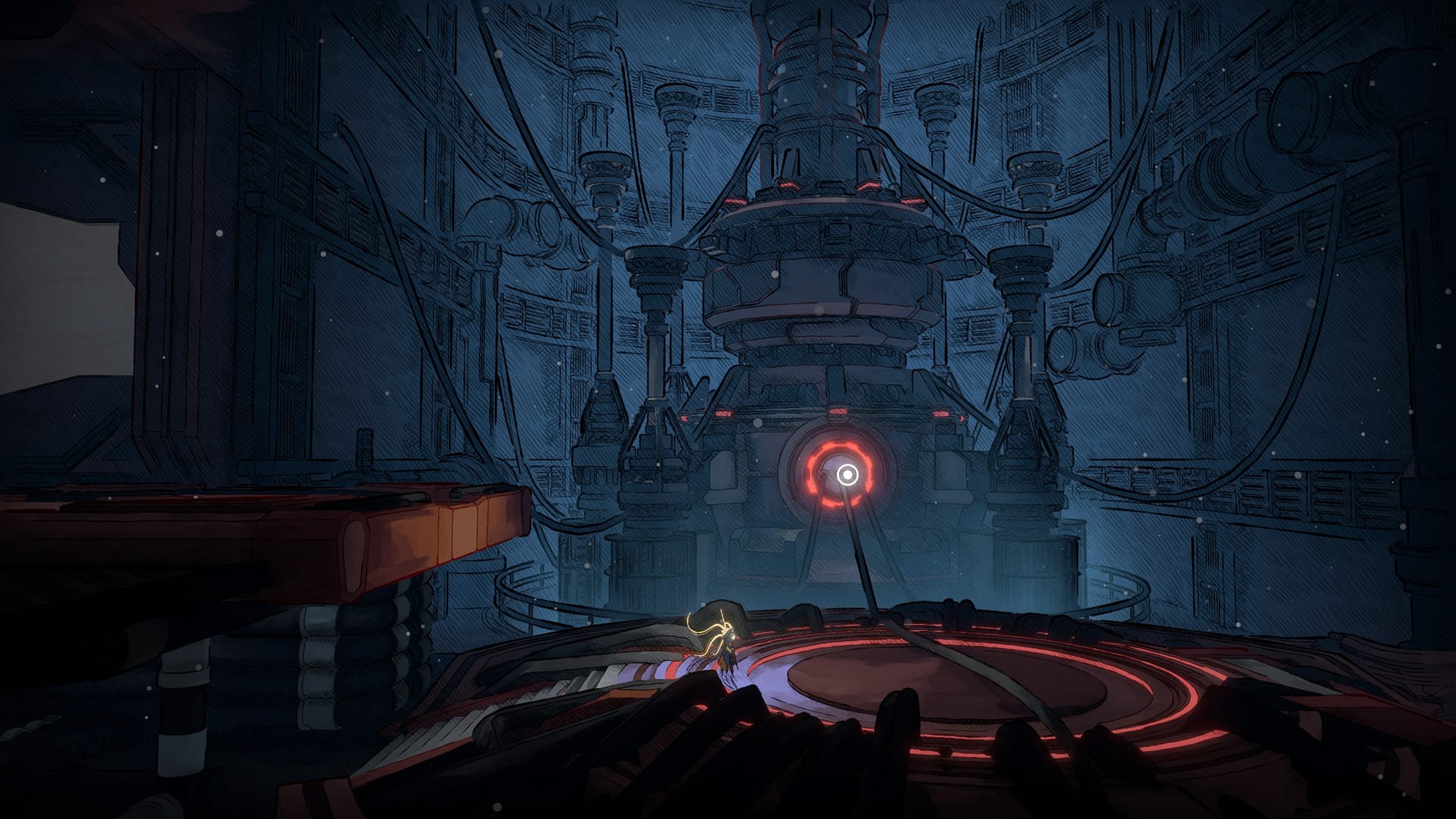
Suffice it to say MIO is an interesting world to dive one's little, nimble "Watcher"-class android self into. A game that of course lives and dies off the curiosity of its players and that need to know what's happened. But whose added emotional pay-off's and reveals – both affirming and deflating alike – are what make it so special. For a game that isn't shy of doing the classic "your character now moves sluggishly for a brief period" move, MIO finds a way to make even these cliched of design choices, feel justified.
Indeed, MIO: Memories in Orbit is one of the best examples as of late of a developer clearly inspired by and taking notes from a spread of games – both inside and outside its own genre. Yet recognizing that such influence, can be as much a springboard for something else. Yes, you have the Hollow Knight-inspired selection of modules to equip one's self with – each module taking up a certain amount of space in one's memory slot. Just as there's the notion that permanently marking down newly-discovered sections and slithers of the map, can only be done at checkpoints.
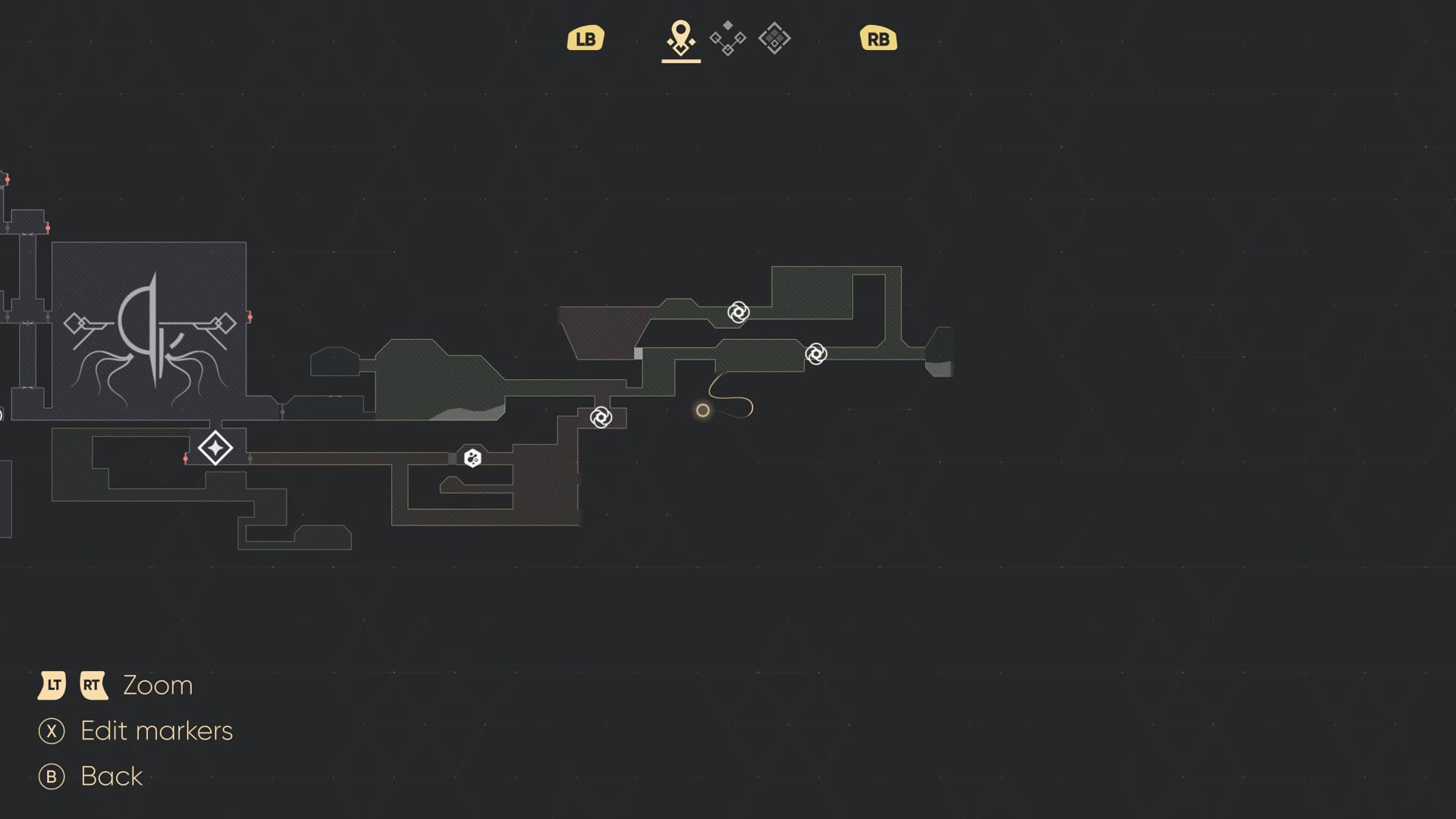
But in addition, MIO poses the question on how important you consider such conveniences, as fast-travel. For its only through hunting down a given checkpoint's "Overseer" – hidden somewhere in a given region – are you granted that luxury. Likewise, a more notable feature is the fact that players can't heal themselves freely in the midst of exploration. Nor can they, upon death, run back to recover any lost currency that hasn't been converted by any number of devices dotted about the map. If you die, that loose bundle of Nacre (as it's referred to in-game), is gone for good.
Yet these slight tweaks to the nature and indeed peril of exploration in the end pay off to great effect. By way of the game's map itself and again, how MIO: Memories in Orbit serves as one of the best-in-class cases of an environment riddled with danger and risk, but never shying from tempting those easily swayed, by an alternate route.
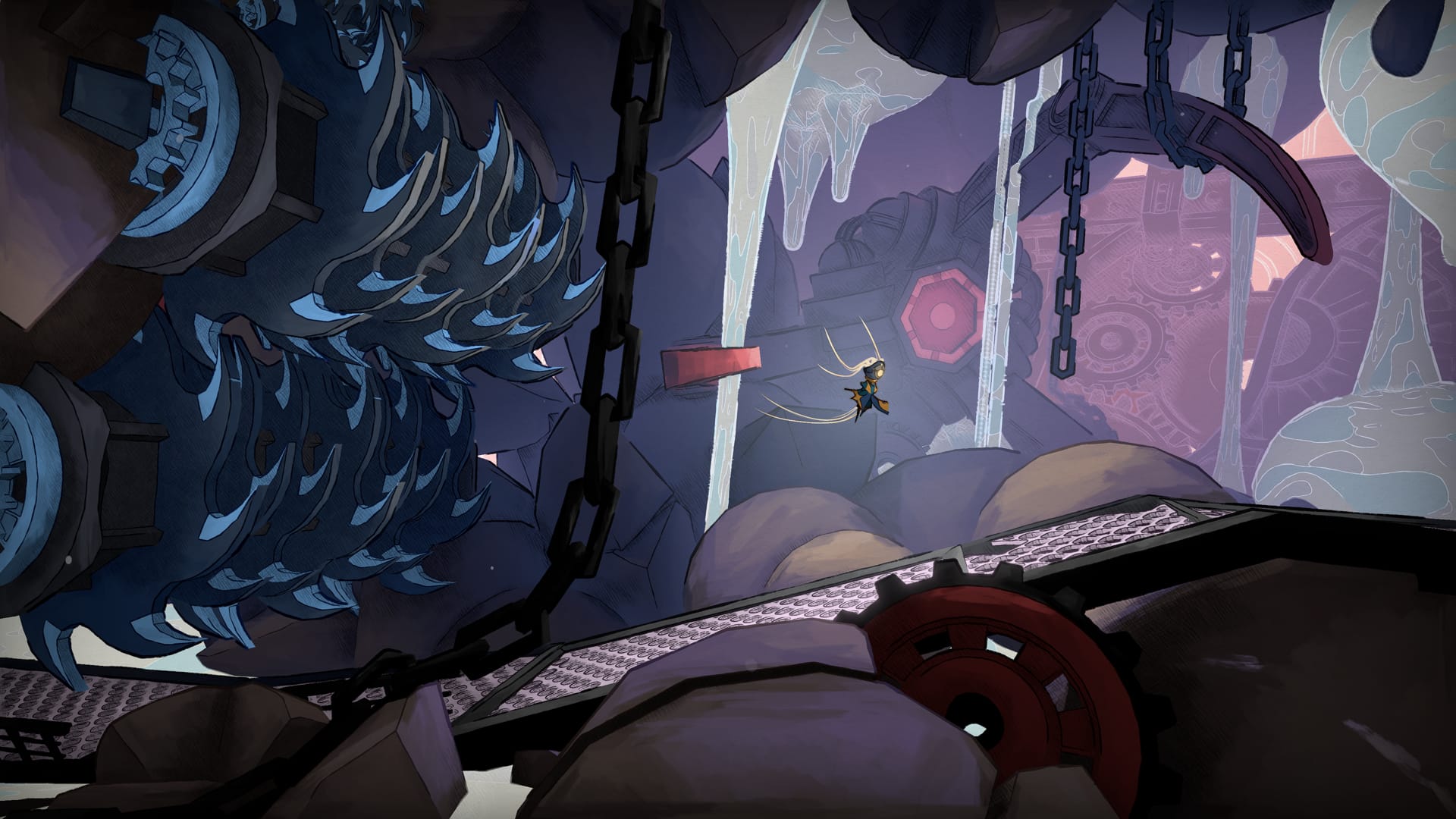
Despite there being a clear, main path to easily identify and progress through, such is the amount of optional challenges, reaction-heavy platforming segments and hidden areas to uncover. On top of the optional biomes and zones seldom hinted at, to uncover. The discovery of one in question following on from – again, no spoilers – what might be one of the biggest and best "wait, WHAT?!" twists/reveals, experienced in a game of this type. A twist – through its very set-up and delivery – I'll go out on a whim and claim hasn't been executed in a Metroidvania before. A reveal some, admittedly, may cotton onto much earlier, but one I was oblivious to, up to that point.
There are just so many of these brief, delightful, revelatory little moments that help keep the moment-to-moment play feeling fresh, exciting, unpredictable and while frustrating in the moment, eventually satisfying to finally conquer. The aforementioned precision-platforming segments (another blatant Hollow Knight inspiration, for better or worse), truly testing player's reflexes and muscle memory alike in chaining one ability into another.

And speaking of abilities, again MIO shines in its unwillingness, during the build-up, to give too much away in what one is about to acquire. Subsequently making that notion of item/ability acquisition exciting for me all over again. One ability especially, going as far as to providing a surprising jolt of excitement at just how "game-changing" said ability is. It's these moments that speak to that persistent quality that Metroidvania's as a genre, have proliferated on for the past decade. As does the prospect that, as I had [un]intentionally committed without even knowing up until around the half-way mark: I'd completely missed an upgrade so early on in the game, yet MIO: Memories in Orbit happily allowed me to keep progressing despite its temporary absence.
MIO: Memories in Orbit is of course a challenging game. Those put off by the prospect that challenging platforming segments are not just optional, but at times mandatory to drive the main plot on, may feel MIO is a slightly tougher sell. Not least with the aforementioned burden of not being able to heal out in the field, save for the sighting of specifically-placed chalices. Of which you have to pay Nacre to do so.
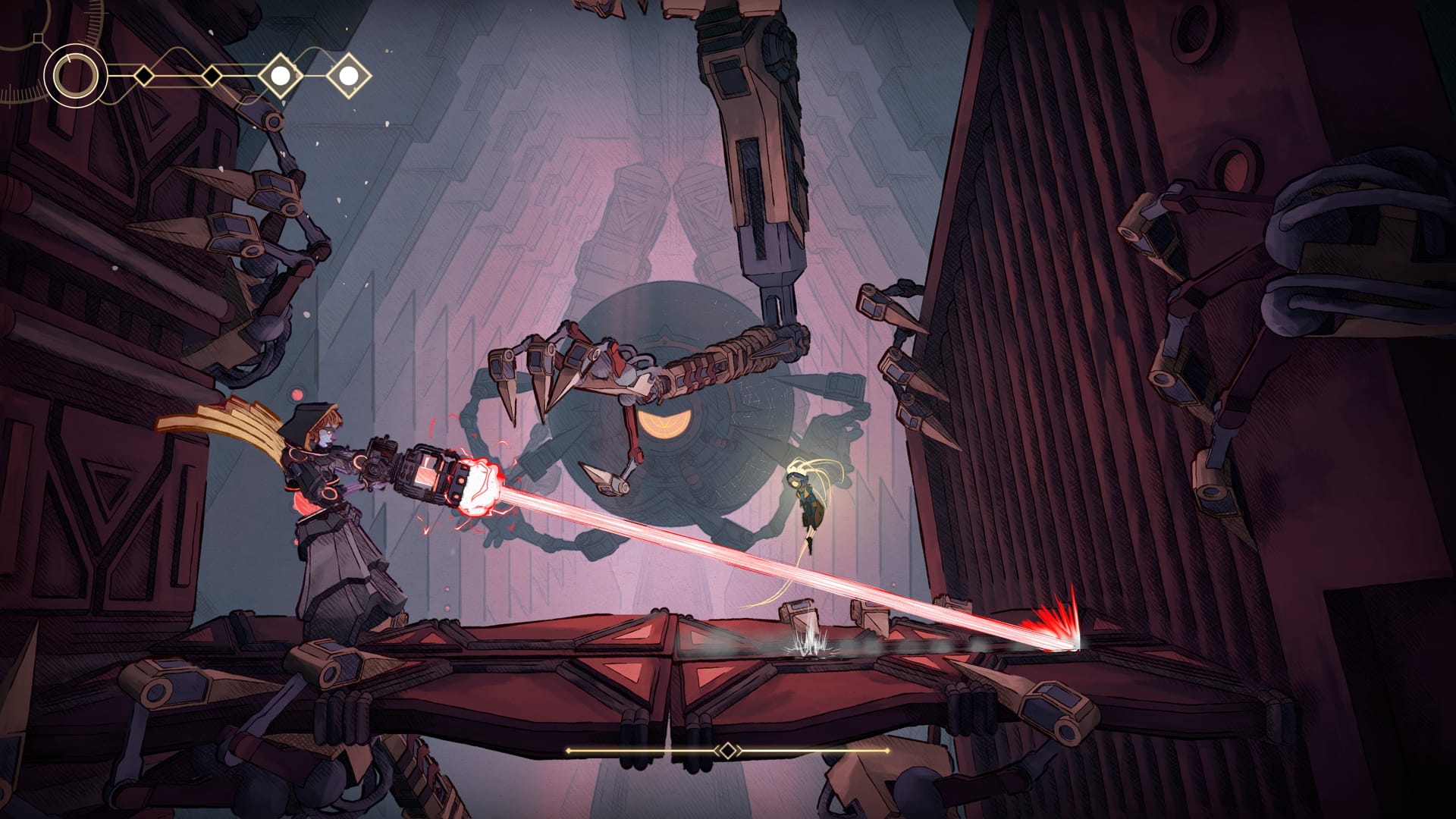
Then there's the case of its many boss battles, or simply combat encounters in general. Again, those required to get to the first of the game's endings, is perhaps this game's only real slip-up and one bound to draw the most frustration. Suffice it to say that MIO's controls and movement, aren't the most fluid or at least serviceable to the kind of combat pace the game is eyeing. Workable enough, but in moments that require pin-point accuracy and fast reflexes, to see a left input mistaken for right, or a downward thrust mistaken for a side one. Most annoying of all, the simple act of striking an enemy somehow causing my character (despite no associated input) to move a touch mid-air, incurring contact damage.
Further to that, for such a common staple amid these types of games, MIO's interpretation of a dodge function (housing hidden mechanics of its own, it might be) as a result doesn't gel as highly with the game's slight hindrances in movement. A nuisance that only grows in frustration with particular cases like the game's optional bosses. A series of fights left to discover for one's self, that admittedly are a little uneven in difficulty placement, but wherein precise inputs and/or maintaining some level of safety and positioning are key. So for the game to make it that tad more frustrating, while not entirely damaging does make said tense scenarios slightly more problematic than what they should be.
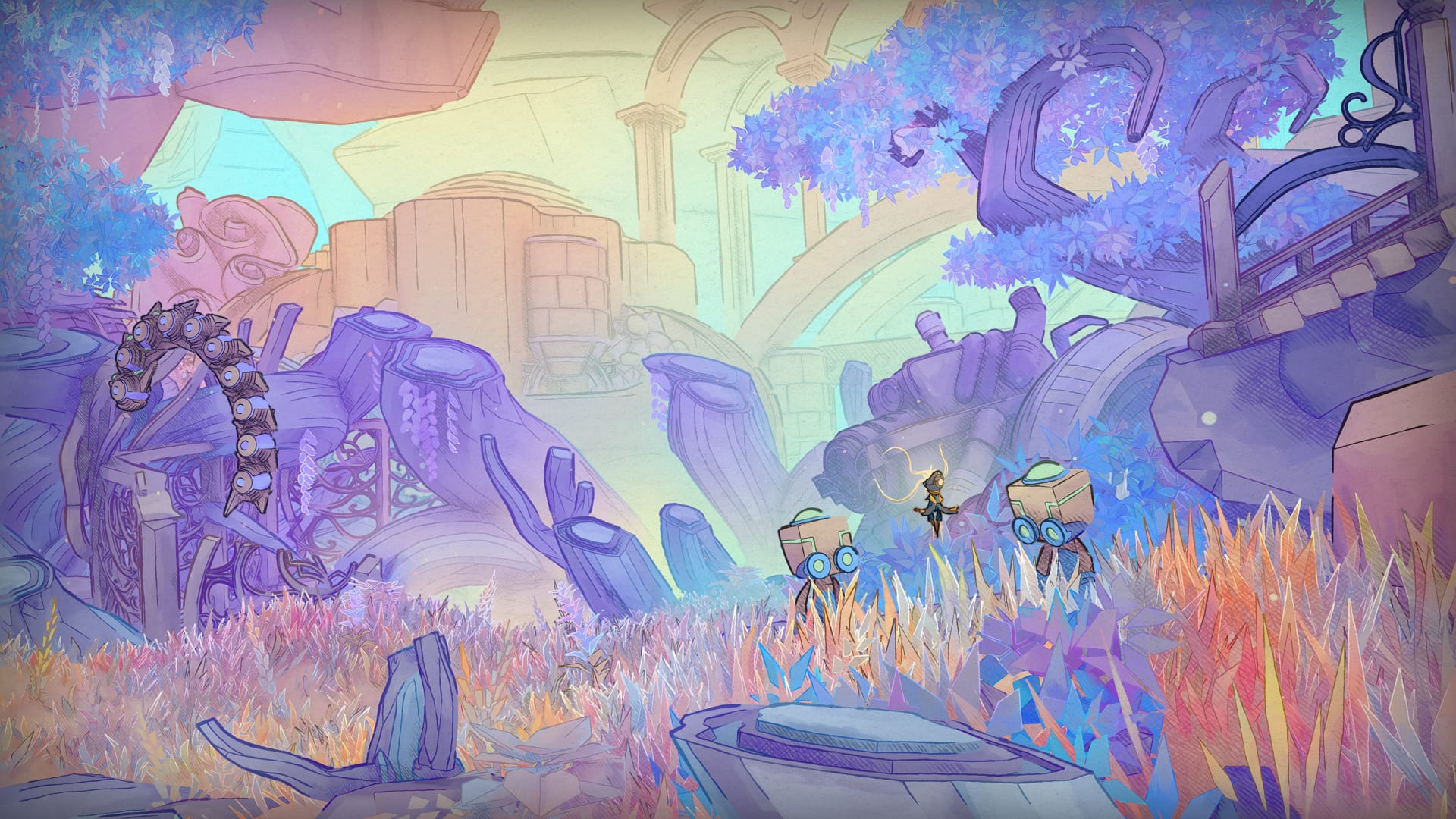
Yet even with these minor shortcomings, Douze Dixièmes have nonetheless pulled off something incredible here. A Metroidvania, not only terrifically designed in its curiously labyrinthine way. With an intriguing art-style and aesthetic to match. But to go beyond the appeal and peril of such exploration and platforming – to imbue the game with an interesting take on themes of hope and indeed hopelessness alongside. Delivered in ways both conventional and unconventional alike. MIO: Memories in Orbit never stops surprising. Like the past great's that kicked off this genre's revitalization in Axiom Verge and Ori alike, MIO is befitting that illustrious moniker, as one of the best Metroidvania's in recent times.